Stretching Cat Machine
First Impression: Minimalist, Modern, and Instantly Recognizable
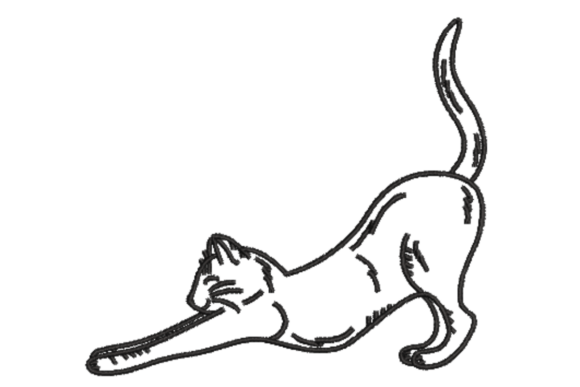
As an embroidery designer who’s prepped over 200 craft fair booths—and watched customers pause mid-aisle for the right design—I’ll say it straight: Stretching Cat Machine lands with quiet confidence. It’s not loud or cartoonish; it’s a sleek black outline of a cat mid-stretch—graceful, intentional, and effortlessly feline. That minimalist approach reads as modern, not generic. At a glance, it feels premium—not “cute overload,” not rustic charm, but clean, contemporary, and emotionally resonant. That matters when your booth has 37 other cat-themed items. This one stands apart because it breathes.
Where It Shines on Craft Fair Products
Tote bags: Perfect as a centered chest logo (4–5” wide). The strong outline holds up beautifully on canvas and linen blends—even with light wear. Customers love it on structured market totes; it signals handmade quality without shouting.
Aprons: Ideal above the pocket or along the waistband. The stretching pose echoes movement and comfort—ideal for bakeries, florists, or makers who want personality without clutter. Works especially well on medium-weight cotton twill.
Tea towel embroidery: A standout on flour-sack or waffle-weave towels. Because the design is outline-based—not filled—it avoids stitch density issues on absorbent, textured fabric. No sinking, no puckering—just crisp definition against white or oatmeal backgrounds.
Embroidered patches: Highly effective at 2.5–3”. Clean lines translate cleanly to merrowed or heat-seal backing. Great for swapping onto denim jackets or kids’ backpacks—adds instant charm without overwhelming.
Caps and curved surfaces: Use caution here. The stretch pose includes subtle curves that may distort on low-profile caps unless digitized with gentle underlay and reduced density. Test on scrap first—especially near the tail and hind legs.
Pillow covers and pouches: Excellent focal point at 4–6”. On linen or velvet, the black outline creates elegant contrast. Avoid ultra-dense fill areas—this design doesn’t need them, and skipping them prevents stiffness in small, tactile items.
What Makes It Sell—Beyond Cuteness
This isn’t just another cat silhouette. Stretching Cat Machine taps into universal moments—morning stretches, post-nap languor, quiet confidence. That emotional resonance translates directly to buyer engagement. At craft fairs, I’ve watched customers point, smile, and say, “That’s *my* cat.” That connection drives impulse buys and repeat visits.
It photographs exceptionally well for Etsy listings and printable mockups. No gradients, no tiny fills—just bold negative space and confident line work. That means your digital embroidery file renders cleanly across devices, and your product photos pop without heavy editing.
For batch production? Highly repeatable. Low thread color count (one solid black works in most cases), consistent spacing, and scalable geometry mean fewer re-hooping stops and smoother workflow—critical when you’re stitching 40 tote bags before Saturday morning.
Careful-Use Notes Every Designer Should Check
- Dense stitch areas: None reported—but verify the actual embroidery file. If any interior contouring or shadow fills were added later, they could cause issues on thick fabrics or textured tea towels.
- Tiny details: The paw pads or ear tips may be minimal—ensure they’re legible at 2” scale if planning small patches or keychain tags.
- Dark fabric: Black-on-black won’t read. Always pair with high-contrast thread—white, cream, or metallic silver for visual lift. Confirm thread colors match your brand palette before bulk ordering.
- Small sizes: Below 2”, clarity drops. Skip using Stretching Cat Machine as a subtle corner accent on handkerchiefs or sachets unless you’ve tested legibility on your target fabric.
Design Integrity Meets Booth Impact
In my booth setup, I use Stretching Cat Machine as a visual anchor: one large pillow cover (6”), three matching tea towels hung on a dowel, and a stack of totes with the design centered just below the handles. It creates rhythm without repetition—customers notice the motif, then realize it’s versatile across categories. That consistency builds perceived brand strength, even for solo makers.
Handmade quality shines here—not because it’s intricate, but because its restraint demands precision. Wobbly stitches or poor stabilizer choice will show. So yes, it elevates perceived value… but only if executed well.
Practical Embroidery Designer Notes
- Test the embroidery file on scrap fabric matching your final product—canvas, terry, twill, and knit.
- Check thread contrast on both light and dark fabric swatches before cutting yardage.
- Review spacing between limbs—tight curves can nestle too close and cause thread breaks.
- Confirm hoop size compatibility—some versions may require 5x7” minimum; others scale down smoothly to 4x4”.
- Inspect stitch density: outline-only files should sit around 8,000–12,000 stitches. Anything higher warrants scrutiny for towel or cap use.
- Use cutaway stabilizer for knits and lightweight linens; tear-away works fine for stable cottons and tea towels.
- Create at least one real mockup—not just a digital preview—before committing to 50 units.
- Compare how the design reads across three fabric colors: white, oat, and charcoal. Adjust thread accordingly.
- Verify commercial licensing status before selling finished products—especially for Etsy sellers and small shop product lines.
Final Thought: A Design That Sells Itself—If You Respect Its Simplicity
Stretching Cat Machine isn’t flashy—but it’s memorable. It doesn’t rely on novelty; it leans into quiet authenticity. For craft fair sellers, handmade shop owners, and digital embroidery file creators, it’s a rare balance: easy to produce, strong in person, and deeply aligned with how people actually connect with cats—not as icons, but as companions in motion. When your table is full of texture, color, and energy, this design offers stillness that sells. Just remember: its power lies in its precision. Honor the line. Trust the stretch. And always, always test first.