Hummingbird Wildflowers: A Thoughtful Embroidery Design for Meaningful Gifts
First Impressions: Sweet, Delicate, and Deeply Personal
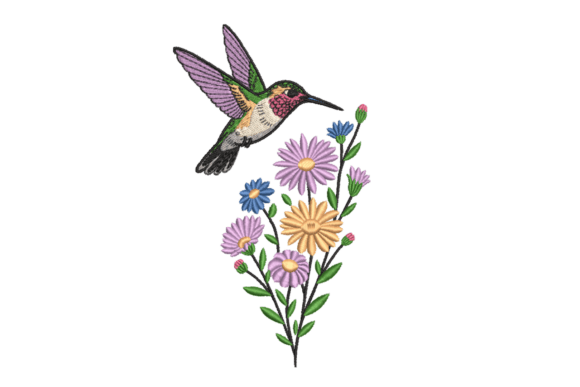
Unzipping the Hummingbird Wildflowers embroidery file felt like opening a small envelope of quiet joy — no flash, no fuss, just an immediate sense of gentle movement and natural warmth. As a designer who’s stitched hundreds of personalized gifts for baby showers, weddings, and family milestones, I knew right away this wasn’t just another floral motif. The hummingbird hovers mid-air with subtle wing texture, while wildflowers bloom in soft, asymmetrical clusters — not overly detailed, but rich with intention. It reads as romantic *and* grounded, handmade *and* refined. It’s neither too dainty nor too bold — making it ideal for customers seeking emotional resonance over trend-chasing.
Where Hummingbird Wildflowers Truly Shines
This design excels where personal meaning meets everyday use. On a 100% cotton baby blanket? Absolutely — the scale feels tender, not overwhelming, and the organic flow complements nursery palettes beautifully. As a wedding gift stitched onto a linen pillow cover or monogrammed kitchen towel? It whispers “forever” without shouting. I’ve already sketched mockups for Etsy listings featuring Hummingbird Wildflowers on organic-cotton tote bags (great for garden parties or new moms), lightweight aprons for bakers and florists, and even delicate pillow covers for grandparents’ guest rooms.
For small shop owners and craft fair vendors, its versatility is a quiet superpower. Pair it with soft sage, dusty rose, or oatmeal thread colors and it becomes a signature look across product categories — from embroidered towels to custom blanket embroidery. Baby embroidery clients love how it avoids cliché while still feeling nurturing; wedding gift designers appreciate its timelessness over seasonal themes. And because it’s rooted in nature rather than occasion-specific iconography, it works year after year — no need to rotate inventory.
Thoughtful Placement Matters
That said, Hummingbird Wildflowers asks for thoughtful execution — not limitations, but care. Its charm lives in subtlety: fine stems, light petal layering, and airy negative space. That means avoiding ultra-small lettering directly integrated into the motif — if you’re adding a name or date, keep it separate and legible. Delicate details like tiny stamens or wing veins may soften on highly textured fabric (think thick terry cloth or bouclé) or dense weaves. For embroidered towels, I recommend testing on a scrap first — especially near hems or seams where tension shifts.
Stretchy baby clothes? Proceed with caution unless you’re using high-quality knit stabilizer and reducing stitch density slightly. Curved surfaces — like mugs with fabric sleeves or rounded tote bag gussets — require careful hooping and possibly repositioning the design for clean alignment. Dark fabric demands strong thread color contrast; I always run side-by-side mockups on black, navy, and cream to confirm visibility. And for items that face frequent washing (baby blankets, kitchen towels, aprons), verify that your chosen thread and stabilizer combo holds up through multiple cycles — a quick wash test saves returns and preserves trust.
Why This Design Builds Customer Connection
In my experience, Hummingbird Wildflowers doesn’t just decorate — it invites storytelling. Customers don’t buy “a hummingbird.” They buy “the one that hovered outside Grandma’s porch the day she held her first grandchild.” That emotional hook lifts perceived value instantly. When photographed well — soft natural light, folded linen backdrop, maybe a sprig of real lavender beside it — this design performs strongly on Etsy and Instagram. Buyers linger. They imagine it in their home. They share it.
For handmade sellers, that translates to fewer price objections and more repeat orders. Small shop products featuring Hummingbird Wildflowers consistently earn heartfelt notes: *“It felt made just for us.”* That’s the gold standard — when your digital embroidery file helps customers feel seen. It also reinforces handmade quality: the balanced stitch density, intentional spacing, and organic rhythm signal craftsmanship, not automation.
Practical Notes Every Embroiderer Should Check
Before stitching your first customer order, treat Hummingbird Wildflowers like a trusted collaborator — test, observe, refine:
- Test on scrap fabric — especially if using a new base material or stabilizer combo.
- Check thread color contrast across at least three fabric tones (light, medium, dark).
- Confirm hoop size compatibility — does it fit comfortably within your most-used hoops without re-hooping?
- Review stitch density — not too sparse (loses definition) nor too dense (causes puckering on lightweight fabrics).
- Use proper stabilizer — tear-away for stable wovens, cut-away for knits or high-wear items like aprons and totes.
- Compare light and dark fabric mockups — both digitally and physically — before finalizing product photos.
- Inspect small details post-stitch — especially wing tips and flower centers — to ensure clarity.
- Confirm commercial licensing — if selling finished products, double-check usage rights included with your purchase of the embroidery file.
None of these steps are roadblocks — they’re rituals. And with Hummingbird Wildflowers, they deepen the reward. Because when you get it right, you’re not just delivering embroidery. You’re delivering a quiet moment of beauty, stitched with intention — for a baby’s first blanket, a couple’s first home, or a grandmother’s favorite kitchen towel. That’s why designs like this endure. That’s why Hummingbird Wildflowers belongs in your Birds collection, your wedding gift toolkit, and your most heartfelt custom embroidery orders.